
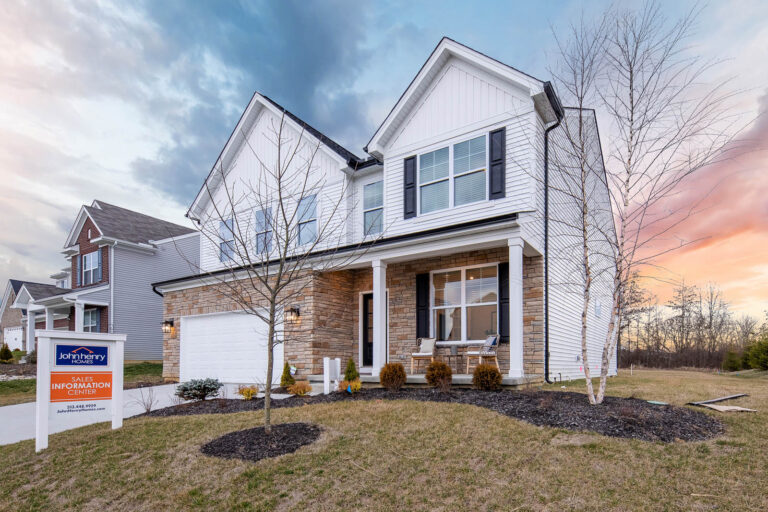

Key things to consider when buying a house before you sign

Kevin Clark
• 12 min read
Picture this: a couple tours a house on a Saturday, falls completely in love with the open kitchen and the big backyard, and submits an offer by Sunday night. Three months after closing, a home inspector they hired for a different property mentions that the foundation style in that home commonly develops settling cracks, a known risk in clay-heavy soils like those found across much of Ohio. Their inspector caught it. The one they rushed past didn’t. In one case like this, the repair bill came in at $12,000. The things to consider when buying a house aren’t complicated, but skipping even one category can turn a smart purchase into an expensive education.
This article is a practical, prioritized checklist covering the factors that actually separate a good investment from a regrettable one: budget reality, location anchors, school district verification, neighborhood risk, inspection findings, and financing alignment. One note before we get into it: school district quality is one of the most consequential factors in long-term home value, and most buyers research it last. We’ll cover it early, because that’s where it belongs.
Things to consider when buying a house: Budget and ongoing costs
The real upfront costs beyond your down payment
Closing costs run 2 to 6% of the purchase price, and they’re due at the table, separate from your down payment. On a $350,000 home, that’s $7,000 to $21,000 in cash you need ready at closing. That number includes lender origination fees, title and settlement fees, prepaid homeowners insurance, and property tax escrow. Buyers who don’t plan for this can stall at the finish line, insufficient funds at closing can jeopardize the deal entirely. For a deeper breakdown of typical items included in closing fees, see a practical guide to understanding mortgage closing costs. If you want additional budgeting context as you prepare, our Financing Your Dream Home: Smart Budgeting Strategies article walks through how to translate these numbers into a realistic plan.
Monthly ownership costs that first-time buyers underestimate
Beyond the mortgage, ongoing costs typically add $1,300 to $1,800 per month on a median-priced home. That figure covers property taxes, homeowners insurance, HOA fees where applicable, and a maintenance reserve. The standard 1 to 2% annual maintenance rule gives you a starting point, but older homes in deferred condition will demand more. Before you set a search radius or target a specific school zone, run the full monthly number and make sure it fits your actual budget ceiling, not just your mortgage pre-approval amount. For a consumer-facing look at typical monthly homeownership expenses, this reporting on homeownership costs per month is useful context.
How your credit score and down payment shape your rate
A 740+ credit score versus a 620 score can mean a 1.5% difference in APR, which translates to $100 to $300 more per month on the same loan amount. Buyers putting down less than 20% on conventional loans trigger PMI at 0.5 to 1% of the loan annually. FHA loans require PMI for the life of the loan unless you refinance. Check your credit score and calculate your full-cost monthly budget before you set one search filter. Everything else flows from that number.
Why school district quality should shape where you search
The measurable impact on home values and buyer demand
Homes in top-rated school districts sell for significantly more than comparable properties in average districts, some studies put that premium anywhere from 10 to 49%, depending on the market. Research also suggests that a 5% improvement in district test scores correlates with roughly a 2.5% increase in nearby home values. That’s not a soft preference signal. It’s a pricing mechanism built into the market.
Depending on the survey, somewhere between a quarter and nearly half of all buyers rank school quality as a top priority, and listings in high-performing districts receive measurably more online views and sell faster, even when the buyer has no children at home. Resale value is the reason to care about this even if school-age children aren’t part of the picture.
Choosing a community already positioned in the right zone
Smart buyers don’t just search by price range and square footage. They draw their search boundary around the school zone first, then find homes within it. When your builder has already done that location work, one major variable is off your homebuyer’s checklist. John Henry Homes builds its communities with this reality in mind. Neighborhoods like Caravel, Hunters Ridge, and Turning Leaf are positioned within the boundaries of established Greater Cincinnati districts including Lakota, which ranks 12th in the metro area, sits in the top 20% of all Ohio districts, and carries a 95% graduation rate with strong college readiness marks. Buyers should verify current boundary assignments directly using their county’s official enrollment tools and recent GreatSchools or Niche ratings, as district lines can shift; the federal overview on school district boundary data is a useful starting point for understanding those changes (school district boundaries and updates).
How to verify school district boundaries before you commit
Reading zoning maps the right way
School district boundaries do not follow city or county lines, and they can be redrawn. A house on one side of a street can sit in a different district than the house directly across from it. Use your state’s Department of Education boundary map tool, not just the listing agent’s description. Enter the exact property address into the district’s official enrollment tool to confirm assignment. Cross-reference the specific parcel address, not the neighborhood name, because subdivision names and district boundaries often don’t match.
Where to find reliable school ratings and what the scores mean
GreatSchools (1 to 10 scale) and Niche both aggregate test scores, student-teacher ratios, college readiness data, and parent reviews. A GreatSchools score of 8 or above signals well above-average performance and is widely used as a threshold in real estate searches. Neither tool is perfect on its own. Cross-reference with Ohio’s Local Report Card for raw proficiency data and year-over-year trends. A district that’s improving is often more valuable than one declining from a formerly high score. For an explainer on how those ratings are produced, see this overview of GreatSchools ratings.
Confirming your address falls in the right attendance zone
Even within a district, elementary and middle school attendance zones can vary by street. Confirm the specific school your child would attend, not just the district name. Call the district’s enrollment office directly, give them the property address, and get written confirmation. This is a five-minute step that eliminates one of the most common post-closing disappointments for families.
Location and neighborhood checks that protect your investment
What a proper neighborhood walkthrough reveals
Drive the neighborhood at different times: morning rush, evening, and on a weekend. Traffic patterns, noise levels, and general upkeep look different at 7 a.m. versus 7 p.m. Check proximity to key commuter corridors, grocery stores, and medical facilities. For Cincinnati and NKY buyers, access to I-75, I-71, and the AA Highway affects daily convenience, and many local buyers in communities like Liberty Township and Colerain Township treat corridor access as part of the value equation when considering long-term resale.
Future development and zoning risk
Visit your county auditor’s or planning commission’s website to check for pending rezoning applications or large development proposals near the property. A vacant lot adjacent to the home you’re considering could become a commercial strip or a distribution center. Both can affect property values and school enrollment numbers. This takes twenty minutes online and belongs on every buyer’s checklist before they make an offer.
Inspection red flags, key things to consider when buying a house
The five defects that show up most often and cost the most
Roofing problems and electrical issues top inspection findings, appearing in roughly 19 to 20% and 18 to 19% of reports respectively. Full roof replacements run $5,000 to $15,000. Panel upgrades or rewiring range from $2,000 to $10,000 or more. Foundation issues are less common but among the most severe: minor crack repair starts around $500, while extensive foundation work can exceed $10,000 and may affect your ability to insure or refinance the home, confirm with your insurer and lender before proceeding.
Plumbing and HVAC round out the high-cost list. Homes built between 1978 and 1994 may contain polybutylene pipes, which are prone to failure and costly to replace. Full HVAC replacement averages $3,000 to $7,000. Know the home’s age and material history before you waive an inspection. Inspection fees, often a few hundred dollars, are small relative to the repair risks you absorb by skipping one. For a list of common inspection findings and which ones typically require immediate attention, consult your inspector and local resources before you sign anything.
Questions to ask your inspector on site
Ask the inspector to explain every finding verbally, not just flag it in the report. For each item, find out whether it’s a safety issue, a maintenance item, or a potential dealbreaker. Those are three different categories with three different responses. Get repair cost estimates in writing from licensed contractors before you negotiate, not after you close. Seller concessions based on inspection findings are possible in slower markets, but you need contractor numbers to negotiate effectively.
Financing checkpoints and making a confident offer
Pre-approval, loan types, and what to consider before buying a home
Pre-approval is based on verified income, credit, and assets. Pre-qualification is only a rough estimate. Sellers in competitive markets take the difference seriously, and so should you. First-time buyers have real options: FHA loans accept 580+ credit scores with 3.5% down but carry mandatory PMI. Conventional loans offer more flexibility and no PMI at 20% equity. VA and USDA loans eliminate PMI entirely for eligible buyers. Match your loan type to your credit profile and your actual down payment capacity, not to what sounds most appealing at a glance. If you’re new to the process, read our First Time Home Buyer Guide for a practical walkthrough of loan types and pre-approval steps.
Negotiation leverage and what to include in your offer
An inspection contingency, financing contingency, and appraisal contingency each protect a specific part of your investment. In competitive markets, buyers are tempted to waive these. Understand exactly what you give up before you do, because waiving an inspection contingency means accepting the home in its current condition regardless of what a thorough inspection would have found. In slower markets, sellers may be willing to cover some closing costs as a concession, depending on conditions, that could meaningfully reduce your out-of-pocket at closing and is worth building into your initial offer structure.
The checklist that separates prepared buyers from expensive lessons
Work through this framework before you fall in love with a floor plan: get your full-cost budget honest, anchor your search to school district boundaries, verify every claim about zone assignment with the district directly, inspect the property thoroughly with a licensed inspector, and align your loan type to your credit profile and down payment reality. Each step builds on the last. Skipping one doesn’t just create a knowledge gap; it creates financial exposure.
The school district point deserves one more emphasis: it isn’t just a quality-of-life decision. It’s one of the strongest predictors of long-term home value and buyer demand. Buyers who anchor their search to a strong district before they filter on anything else are buying into a market dynamic that works in their favor at resale.
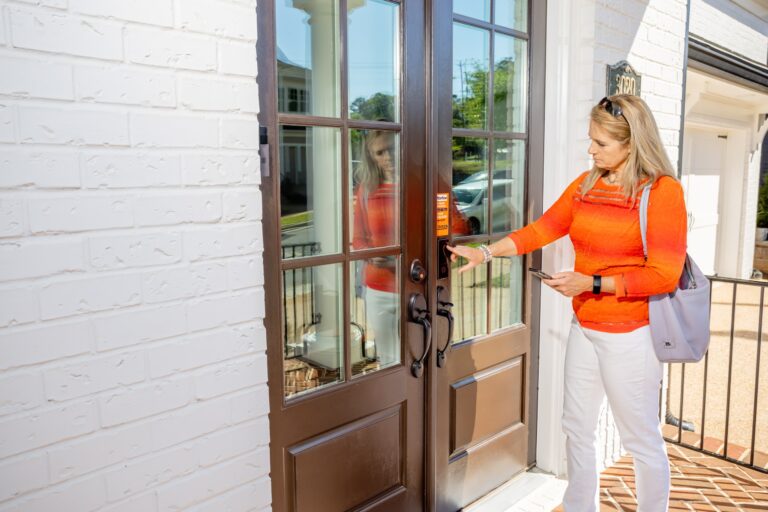
Buyers who work through this checklist before touring are far less likely to be surprised after signing. Use this full list of things to consider when buying a house to stay ahead of the costs, the risks, and the details that derail deals. If you’re looking at new construction in Greater Cincinnati or Northern Kentucky, John Henry Homes builds in communities already positioned within established, well-regarded school zones, with homes starting from the mid-$300Ks and self-guided tour options through NterNow so you can explore on your own schedule. The location work is already done. Your checklist just got shorter. For more on the types of homes we build and how they align with local school zones, see our overview of Custom vs. Semi-Custom vs. Spec Homes in Cincinnati.
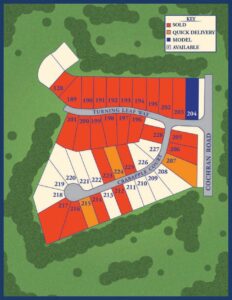
Turning Leaf: New Homes in Hamilton Township’s Little Miami School District
Josh Blatt
• 14 min read
Is a Smart Home Worth It? What Comes Standard in a New John Henry Home
Josh Blatt
• 7 min read
New Construction Homes in Colerain Township: A Guide to Hunters Ridge
Josh Blatt
• 4 min read
New Homes in Liberty Township: Why Families Choose Caravel and Lakota Schools
Josh Blatt
• 4 min readRelated Articles
First-Time Homebuyer in Cincinnati: Grants & Next Steps

Buying a New Build Home for the First Time: Full Guide
Tour New Homes on Your Schedule: A Practical Guide
Want to know how to buy and sell a home effectively
Get exclusive access to the best homes on the market by signing up today.