

New Construction Homes: What Every 2026 Buyer Should Know

Kevin Clark
• 12 min read
Most buyers start shopping for new construction homes the same way: they find a model home they love, sit down with a builder’s sales rep, and walk away with a glossy brochure and a head full of monthly payment numbers that somehow don’t add up later. The new construction process is genuinely different from buying a resale, and the gap between a good outcome and a frustrating one almost always comes down to how prepared a buyer is before they walk into that sales office.
Builders like John Henry Homes, an established regional home builder serving Greater Cincinnati and Northern Kentucky, are upfront about this. The process has moving parts that resale transactions don’t. You’re navigating base price vs. upgrade pricing, builder contracts drafted to protect the builder, preferred lender incentives that need to be benchmarked against outside offers, and warranty structures that most buyers never review until something goes wrong. This article covers what you actually need to know in 2026: where to find inventory, how to compare builders, what things cost, what to ask before signing, and how to negotiate real savings.
Where to find new construction homes and communities
Dedicated search platforms worth bookmarking
New Homes Source is a comprehensive starting point, with a database of over 12,000 new home communities nationwide that lets you compare floor plans, pricing, and photos across multiple new home builders side by side. New Home Guide covers similar ground and is worth cross-referencing. Both Zillow and Realtor.com have dedicated new construction sections with community pages, floor plan galleries, and builder contact tools, useful for buyers still getting their bearings in a market. Aggregators like these give you a cross-builder view that no single builder’s website can provide, and they’re a practical first stop when you’re searching for new construction houses for sale in a specific area.
Why you should always visit the builder’s website directly
Aggregators don’t always surface every available home, particularly quick-delivery inventory homes and builder homes that are near completion. Builder websites show real-time lot availability, current pricing, and move-in ready options that may not appear on third-party platforms for days or weeks. John Henry Homes, for example, publishes community-specific pages where buyers can browse available floor plans and see lot locations, and the site is worth visiting early to get a clear picture of what’s available. For busy buyers, having that kind of direct access changes the whole early-stage experience.
Whether to use a buyer’s agent for new construction
A common misconception is that a buyer’s agent isn’t useful when buying a new build. The builder’s sales agent represents the builder, full stop. A buyer’s agent typically costs the buyer nothing because the builder pays their commission, though it’s worth confirming this practice with your specific builder, as arrangements can vary by market. A good agent will catch contract red flags, evaluate builder reputation, and identify negotiation opportunities that a first-time buyer would almost certainly miss. Skipping this step is one of the most common and easily avoidable mistakes new construction buyers make, for a quick checklist, see these new construction home tips every first-time buyer needs.
How to compare builders and floor plans before committing
Regional builders vs. national production builders
Large national builders like D.R. Horton, Lennar, and Pulte offer standardized speed and name recognition. What they typically don’t offer is flexibility, local market knowledge, or personal attention once you sign a contract. Regional mid-sized builders fill a different need: more customization, deeper community ties, and a team that actually knows the school districts, commute corridors, and local resale patterns in your specific area. John Henry Homes builds custom and move-in ready homes across communities in the Greater Cincinnati and NKY market, including options with smart home technology and energy-efficient construction built into the base level rather than sold as premium upgrades, worth confirming the specifics directly with their sales team.
What a builder’s track record actually tells you
A polished model home tells you very little about what your experience will be eight months into a build. Google reviews across completed communities, BBB standing, and responsiveness to warranty claims are more reliable indicators. Ask how long the builder has been active specifically in your target market, not just how long they’ve been in business. A builder with finished neighborhoods you can walk through and whose residents you can speak with carries far less risk than one with a single community and a short local history.
Evaluating floor plans and community location together
A floor plan you love in the wrong location is still a compromise. Before falling for a design, assess the community’s position relative to your daily commute and long-term resale dynamics. Check district boundaries carefully, not just the district name, but which specific schools serve that address. Lot size and community design matter more than most buyers expect once they’re actually living there. Larger half-acre lots feel fundamentally different from tight production lots, both in day-to-day living and in how the home holds value over time.
New construction homes: what they really cost and how long they take
New construction pricing vs. resale homes in 2026
The price gap between new builds and resale homes has narrowed significantly in 2026. New homes now average around $218 per square foot nationally, slightly below the resale average of $226, though median total prices remain higher for new builds because they tend to be larger. According to industry tracking, a significant share of builders have cut prices and an even larger portion are offering active incentives, making new construction more financially competitive than it’s been in several years. That said, buyers need to budget for costs new builds don’t include: landscaping, window treatments, fencing, and sometimes appliances can add tens of thousands of dollars after closing depending on the community and finish level.
Timeline expectations by home type
Production homes typically close within 6 to 7 months of contract. Semi-custom homes run 6 to 9 months, and fully custom homes can take anywhere from 9 to 18 months or longer depending on design complexity, permitting timelines, and regional factors. Move-in ready spec homes and quick-delivery inventory homes already at or near completion can close in 30 to 60 days, a significant advantage for buyers with rate locks, lease end dates, or families mid-school-year. The most common delay causes are permitting backlogs, mid-build design changes, weather, and material lead times. Most of these can be partly managed by setting clear expectations at contract signing.
What upgrades actually cost and what they don’t
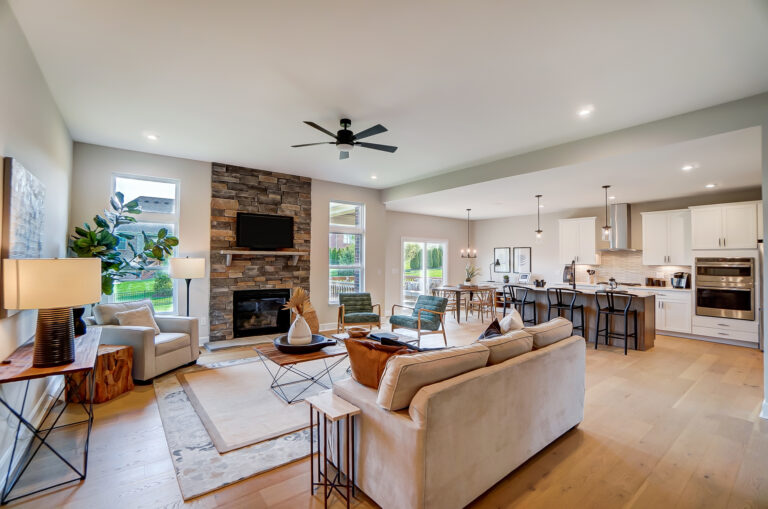
Model homes are staged at their best, and most of what you’re admiring is a premium-level finish package. The gap between the model and the base specification can run into the tens of thousands of dollars, which routinely catches buyers off guard at the design center. Ask for a written list of standard inclusions before you tour anything. Builders who incorporate smart home technology and energy-efficient features into the base price eliminate one of the biggest upgrade-cost surprises buyers face when they sit down to make selections.
Questions to ask before you sign anything at the sales office
How the 1-2-10 builder warranty actually works
Most new construction homes come with a tiered warranty: one year for workmanship and materials, two years for major systems including plumbing, electrical, and HVAC, and ten years for structural defects. Ask whether the warranty is builder-backed or underwritten by a third party, and ask specifically about the claims process. The best practice is to do a 6-month and an 11-month walkthrough to document any issues before coverage windows close. Sales agents rarely bring this up, so it’s on you to ask.
What’s included in the base price versus what triggers an upgrade charge
Get an itemized list of standard inclusions before walking through the model, not after. Flooring, countertops, fixtures, and appliances shown in a model are almost always upgraded selections, and buyers who don’t ask this question early often face sticker shock at the design center appointment. The gap between a base-spec home and what you see in the model can run well into five figures depending on the builder and price point. Having that conversation early lets you budget accurately and compare builders on a true apples-to-apples basis.
What the builder contract says that most buyers miss
Builder contracts are written to protect the builder, and there are several clauses worth understanding before you sign. Binding arbitration waives your right to sue in court if something goes wrong. Price lock terms define what can trigger allowable price adjustments after contract. Deposit structure and refund conditions vary widely, as does the definition of what constitutes an acceptable construction delay. An independent real estate attorney reviewing the contract before you sign is a worthwhile investment, even if the builder discourages it.
Negotiating on new construction homes: incentives that actually work
The incentives builders are offering in 2026
A substantial share of builders are actively offering builder incentives right now. The most common are mortgage rate buydowns paid by the builder to lower your rate for two to three years, closing cost credits, flex cash you can direct toward a buydown or design upgrades, and appliance packages bundled in when cash concessions hit conventional loan caps. Shopping near the end of a quarter can sometimes unlock better deals, as builder sales teams are often working against internal targets and may have more flexibility to move. Move-in ready homes and quick-delivery inventory almost always carry more negotiating room than pre-construction contracts on lots that haven’t been started yet.
How preferred lenders fit into the picture
Builders tie many of their best incentives to using their preferred lender, and that’s not automatically a bad arrangement. Preferred lenders know builder timelines well, tend to close faster, and protect your rate lock in ways that outside lenders sometimes can’t match. That said, get an independent loan estimate to benchmark total costs before accepting the bundled offer. The incentive only saves you money if the underlying loan terms are competitive. Comparing estimates takes an afternoon and can clarify whether the preferred lender deal is genuinely good or just packaged to look that way.
Practical negotiation moves that builders respond to
Builders are reluctant to cut base prices because it affects comparable sales values across the community, which affects every other lot they’re still trying to sell. What they do have flexibility on is cash-equivalent concessions: closing cost credits, rate buydowns, and included upgrades. Lead with the concession that matters most to you financially, whether that’s a lower monthly payment through a buydown or cash back at close. Buying in a new phase of a community, or choosing a spec home that has been sitting on the market for 60-plus days, gives you more leverage than competing for a hot lot in an actively selling section.
Come prepared and you’ll come out ahead
New construction rewards buyers who do the work before they walk through the model. The search process, the builder comparison, the contract review, and the negotiation all favor buyers who ask the right questions early and understand what they’re actually agreeing to. Skipping any of those steps is how buyers end up with surprise upgrade bills, warranty claims that go nowhere, and financing costs that could have been lower.
For buyers in the Greater Cincinnati and Northern Kentucky area, John Henry Homes is a strong starting point. They offer both custom-built homes and move-in ready quick-delivery options across communities in the region, with smart home technology and energy-efficient construction built in as standard features rather than expensive add-ons. Visit their website directly to explore available floor plans, current inventory, and community details, and ask their team about tour options that fit your schedule.
The market in 2026 is genuinely favorable for buyers pursuing new construction homes. Builder incentives are substantial, per-square-foot pricing has shifted in buyers’ favor, and move-in ready inventory is available for those who need to close quickly. The leverage is there, it just takes someone willing to ask the right questions and choose a builder who can actually back up what they’re promising.

9 Advantages of Choosing a Local Cincinnati Home Builder
Kevin Clark
• 10 min read
Turning Leaf: New Homes in Hamilton Township’s Little Miami School District
Josh Blatt
• 14 min read
Is a Smart Home Worth It? What Comes Standard in a New John Henry Home
Josh Blatt
• 7 min read
New Construction Homes in Colerain Township: A Guide to Hunters Ridge
Josh Blatt
• 4 min readRelated Articles

9 Advantages of Choosing a Local Cincinnati Home Builder
First-Time Homebuyer in Cincinnati: Grants & Next Steps

Buying a New Build Home for the First Time: Full Guide
Want to know how to buy and sell a home effectively
Get exclusive access to the best homes on the market by signing up today.