


7 Tips for Effective Custom Home Building Plans

Kevin Clark
• 9 min read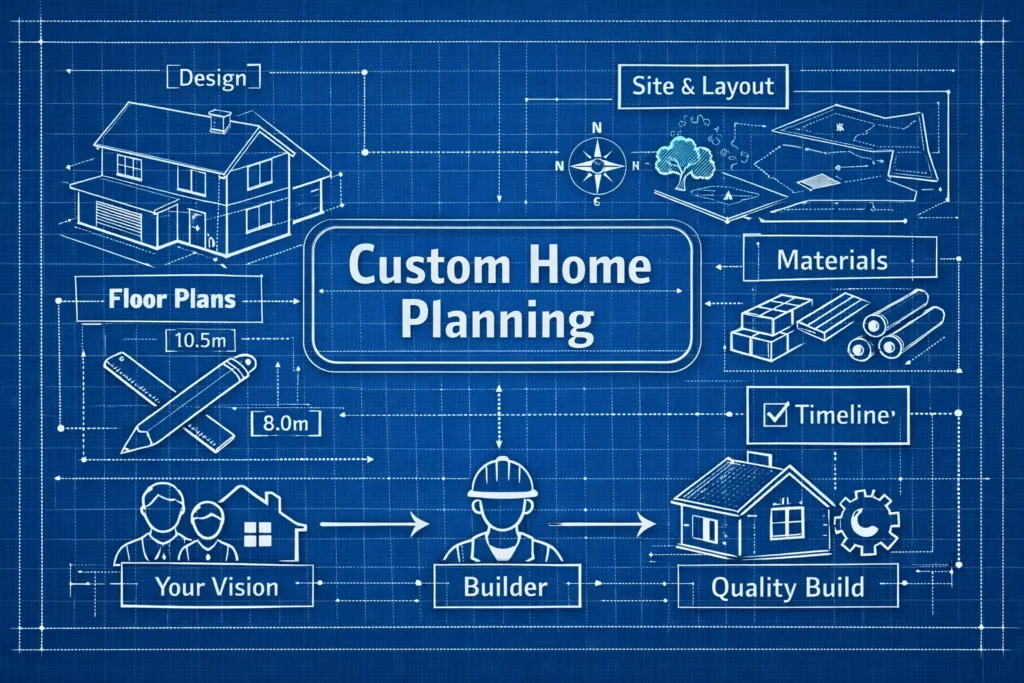
Custom home building plans can cost a few hundred dollars for stock house plans or several thousand for architect-designed sets. Getting the plan right up front saves time and keeps your budget on track. Use these seven practical tips to make your plans reflect how you live and to choose between build-ready sets, plan modifications, or full custom work. The guidance below also clarifies what to expect on costs, timelines, and common add-ons.
Start by defining daily routines, guest flow, work-from-home needs, and storage priorities because those choices affect square footage, structural decisions, and mechanical expectations like HVAC zoning and dedicated data runs. Short scenarios, such as a growing family, empty-nester downsizing, or a steep lot, help you see how scale and style affect cost per square foot and neighborhood fit.
What you need to know
Align your vision and priorities
Document how you live before you sketch layouts. Describe daily routines, who uses each room and how often, guest flow, work-from-home needs, and storage goals so designers solve practical problems rather than guess at preferences. Those choices influence room sizes, circulation, and mechanical expectations such as HVAC zoning, data wiring, or dedicated service spaces.
Decide on scale, architectural style, and adaptability so your home fits both budget and neighborhood. Scale affects cost per square foot and lot fit, while style influences construction methods and material choices. For example, masonry typically costs more than a modern stick-built shell, and a steep lot may require stepped foundations or retaining walls that increase structural costs.
Make a ranked wish list: must-haves, want-to-haves, and deal-breakers. Example: must-haves might include a main-floor office and three full bathrooms, want-to-haves could be a covered patio and a mudroom, and deal-breakers could include no basement or zero stairs. Clear priorities shorten design rounds and make trade-offs obvious when you compare stock house plans, modification services, and fully custom design.
Match your priorities to site realities and a realistic budget so design decisions stay practical. With those constraints clear, it becomes easier to choose the right plan path and set a realistic timeline.
Choose a plan path: stock, semi-custom, or fully custom
Use a simple decision flow: if speed and lower cost matter most, choose pre-designed build-ready options; if you want moderate layout changes or added features, pursue semi-custom modifications; if your lot is unusual or your vision requires unique rooms or detailing, commission a fully custom design. Each path involves trade-offs in cost, schedule, and site specificity. Knowing which trade-offs you accept narrows vendor and design choices quickly. For a focused comparison of production and custom approaches see Choosing Between Production Home and Custom Builders for 2025.
Sources for build-ready and modifiable plans include ePlans, Houseplans.com, The House Designers, Boutique Home Plans, Sater Design, and Family Home Plans, while Truoba offers project and builder workflow tools. Most vendors provide prints with a limited license to build, and modification policies vary: some designers update their own work for a fee while others require a local architect to stamp changes. Expect permit-ready stamps and site-specific revisions to be add-ons in many jurisdictions. For a regional perspective on plan types, see our guide Custom vs. Semi-Custom vs. Spec Homes in Cincinnati.
Full custom work delivers site-specific solutions and bespoke detailing with fewer compromises on layout, and it is worth considering when lot conditions, lifestyle needs, or architectural intent justify the extra time and investment. See the budget section to compare typical fee ranges and timelines so you can weigh options with confidence.
Work with architects and designers
Know the typical design phases so your contract matches the work. Schematic design usually takes 4 to 8 weeks and produces concept layouts, room relationships, massing studies, and a preliminary site plan to confirm overall direction. Design development, typically 8 to 12 weeks, turns those concepts into dimensioned floor plans, elevations, and initial system notes.
Construction documents, usually 4 to 8 weeks, deliver permit-ready drawings, technical details, and a specifications list for bidding. Be explicit about deliverables and revision allowances in your scope of work so everyone knows what is included. Require a defined sign-off point and written change orders for work outside the original brief to avoid scope creep.
Bring these essentials to the first briefing so the team starts on firm ground: a lot survey and topo, a budget range and target construction cost, inspiration images and example floor plans, and your must-have list. Document decisions in meeting notes or emails and agree on the number of included revisions up front to reduce delays. Working with a local design team in Greater Cincinnati and Northern Kentucky can shorten permit rounds through faster lot-fit reviews and coordinated, stamp-ready changes.
Budget, pricing, and timeline
Plan fees typically fall into three buckets: stock plans, semi-custom modifications, and fully custom work, with prices varying by region and complexity. If you want true personalization and site coordination, fully custom plans cost more and take longer. For speed and cost control, build-ready plans or limited modifications usually make more sense.
Expect a stacked timeline from concept to permit approval: schematic design 4 to 8 weeks, site development and engineering 8 to 12 weeks, modification cycles 4 to 6 weeks, final construction drawings 6 to 8 weeks, and permit review 4 to 12 weeks. These windows compress when you come prepared with a concise brief, complete site data, and an experienced local reviewer. Plan for review cycles, since they are where most delays occur.
Common add-ons include boundary and topo surveys, soils and geotechnical reports, structural engineering stamps and calculations, and energy compliance paperwork. Set aside a contingency of 10 to 20 percent for plan and site-related expenses, confirm fixed fees where possible, and get early quotes for specialty reports to avoid last-minute surprises. Getting those items in place early saves time and money.
Site, surveys, and code requirements for build-ready plans
Gather site documents before you shop designs because they directly shape foundations, drainage, and building placement. Obtain a boundary survey and a topographic survey to identify lot lines, slopes, and existing features. Order a geotechnical report to reveal soil-bearing capacity and groundwater levels, and confirm utility locations and any easements so foundations, driveways, and meter locations avoid conflicts.
Local codes, zoning, and HOA rules often force changes to drawings you already like, so budget time for review and small edits. Zoning dictates setbacks and maximum height, impervious surface limits constrain driveways and roof footprints, and sewer or septic rules affect building placement and grading. HOAs may add limits on materials, roof pitch, or window placement, so allow a small adjustment budget for site-driven edits.
A complete build-ready set covers the sheets your permit reviewer expects: a cover sheet, site and foundation plan, fully dimensioned floor plans, exterior elevations, roof plan, building sections, interior elevations for kitchens and baths, structural framing drawings, and key construction details. Builders or local engineers commonly add mechanical, electrical, and plumbing drawings, energy calculations, and any stamped engineering required by the geotech report. For an example of typical municipal expectations, review the building permit plan requirements. With those documents in hand, a concept becomes executable work.
Final checklist and next steps to get permit-ready plans
Use this checklist as an actionable guide when you move a design from concept to permit-ready. Keep copies of every stamped document and site file with your permit submission packet, and assign responsibility for each item to your designer, engineer, or permitting specialist. Tracking who owns each deliverable reduces back-and-forth during review.
- Finalize selections, including the floor plan, exterior materials, finishes, and mechanical preferences. Confirm major choices early so they appear in the construction documents and avoid specification gaps that slow permitting.
- Secure surveys and soils reports, including boundary, topographic, and geotechnical studies as required by the jurisdiction. These reports inform foundation details and any required retaining walls or special drainage work.
- Complete structural engineering for foundations, framing, and any site-specific details. Ask your engineer for stamped calculations tied to the geotechnical report so permit reviewers have what they need.
- Include energy compliance documentation and mechanical, electrical, and plumbing (MEP) drawings when the code requires them. Early coordination with MEP designers avoids conflicts between systems and reduces change orders during construction.
- Obtain stamped drawings from licensed professionals for all required disciplines before you submit the permit packet. Confirm which stamps the authority having jurisdiction requires and get them early to speed review.
- Get HOA or architectural review approvals, where applicable, before you submit permits. Addressing those requirements in advance prevents duplicate rounds of changes after permit submission.
Next steps with John Henry Homes are simple: schedule a consultation for a lot-fit review, request a modification estimate, or ask for a custom design quote. For a fast start, bring your lot survey, a short wish list, and a realistic budget so the team can outline the most efficient path to permit-ready documents in Greater Cincinnati and Northern Kentucky. Learn more about John Henry Homes’ story. John Henry Homes offers self-guided model tours powered by NterNow, move-in ready homes across multiple communities, and smart, energy-efficient features you can include in your plans.
Finish your custom home building plans with confidence
Clear decisions at the start save time, money, and revisions later.

Related Articles

Why Open Concept Kitchen Living Room Design Makes Homes Feel Twice as Big

Book a Tour of the Liam at Hunters Ridge
The Rise of Energy-Efficient Homes in Cincinnati
Want to know how to buy and sell a home effectively
Get exclusive access to the best homes on the market by signing up today.