


How to Choose Custom Home Builders in Cincinnati Ohio

Kevin Clark
• 15 min read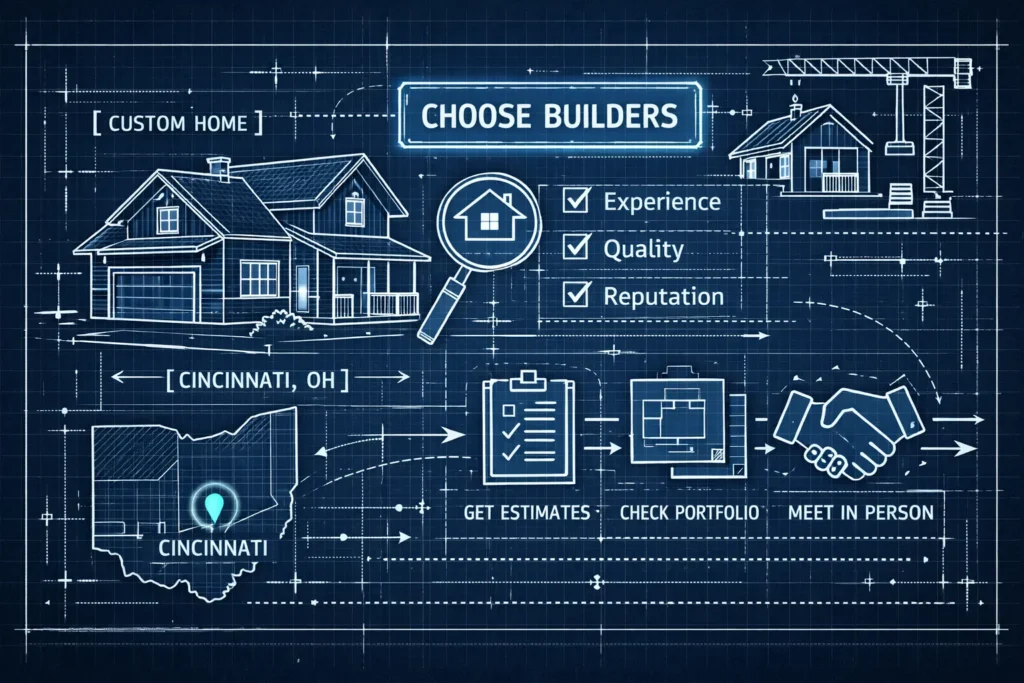
Custom home builders in Cincinnati, Ohio face unique site conditions that affect cost, schedule, and design from lot to lot, so choosing the right builder matters more here than in many markets. When comparing custom home builders Cincinnati, Cincinnati custom home contractors, and luxury home builders Cincinnati OH, look for a partner familiar with local soil profiles, floodplain rules, and permit workflows. Below are the quick questions to ask about site feasibility so you avoid surprise foundation costs or delayed permits when planning custom home construction in Cincinnati.
Beyond soils and permits, neighborhood fit drives resale and long-term value; the same finish package can feel out of place across different school districts. The article explains how experienced design-build firms in Cincinnati and local custom home companies assess resale expectations and when higher-end upgrades protect your investment versus when simpler choices deliver better value. It also provides guidance on gauging a builder’s local network of subcontractors, suppliers, and schedules so building on your lot in Cincinnati or working with new home builders Cincinnati Ohio goes smoothly.
What You Need to Know
- Local site expertise: Cincinnati lots vary block-by-block—confirm your builder understands local soils, floodplains, and permit timelines to avoid surprise foundation costs and delays.
- Compare scopes, not price: Ask for apples-to-apples scopes and allowances so bids are comparable; low per‑sq‑ft numbers often hide site-driven change orders.
- Ask the right questions: Request soil borings, grading plans, setback rules, and septic/sewer status early—these determine cost and schedule more than finishes.
- Verify local network: Ensure the builder regularly builds on private parcels and has vetted subcontractors, suppliers, and permit relationships in Cincinnati/NKY.
- Take immediate next steps: Book a 30‑minute lot and budget review or tour a move‑in model to get concrete timelines and an apples-to-apples estimate.
Why local know-how matters for Cincinnati builds
Cincinnati’s terrain changes block by block, affecting foundations, retaining walls, and permitting timelines. Builders experienced with local soil borings and floodplain mapping anticipate site demands and reduce surprise costs and schedule slips. Before requesting a full quote, ask whether the builder has recent experience with similar sites and whether they budgeted for shoring, retaining walls, or engineered fill.
- Have you completed soil borings for this lot?
- Is the property inside a designated floodplain or steep-slope area?
- Will the build require variances, easements, or special drainage permits?
Neighborhood fit drives long-term value as much as square footage. When comparing custom home builders in Cincinnati, Ohio, choose a builder who understands local resale expectations, high-demand school zones, and which finish packages add market value.
That local market sense tells you when to invest in high-end cabinetry and where simpler, durable choices will deliver better returns. A builder’s local supply chain and subcontractor network also determine speed and quality; locally rooted teams shorten lead times by working regularly with trusted suppliers and subcontractors. Ask for a recent schedule, references for key trades, and confirmation they can build on your lot without long mobilization delays. Following this background, the next section explains how design decisions translate to cost and livability so you can prioritize upgrades.
Key criteria to evaluate custom home builders in Cincinnati Ohio
Design flexibility matters. Ask whether the builder uses in-house design or partners with local architects and how many revision rounds are included. Design-build firms in Cincinnati offer a single contract and faster coordination, while build-from-plan models may lower upfront design cost but limit customization and raise change-order risk. Firms that only show the same three elevations with cosmetic finish swaps are a red flag; true custom work adapts layout, structure, and site-specific solutions.
Ask for line-item estimates and clear allowances. Read an estimate top to bottom so labor, materials, subcontractor fees, and contingency are visible rather than hidden. Typical allowances include cabinetry and countertops, flooring and lighting, and appliances and plumbing fixtures; confirm these items in writing before signing. Per-square-foot comparisons rarely tell the whole story, so focus on apples-to-apples scopes and confirm what changes trigger a formal change order.
Project management, warranty, and references reveal how a builder performs after contracts are signed. A solid warranty covers structural elements, major mechanical systems, and a reasonable call-back window for workmanship; ask for warranty terms in writing and for two recent client references. Use a quick script with past clients: “What issue came up after closing, how quickly did the builder respond, and was the solution permanent?” Their answers reveal service quality more than model photos.
Energy efficiency and smart features save money over time and improve resale. Ask which mechanicals are standard, what energy ratings or certifications the builder pursues, and whether smart-home packages are prewired or added later. Prioritize HVAC efficiency, continuous insulation strategies, and smart thermostats. The following checklist provides questions to bring to your first meeting with a builder.
Costs and timelines: what to budget for
Start with realistic per-square-foot expectations: local benchmarks generally range from about $90 to $500 per square foot depending on finish level and site complexity. For a 2,000 square foot custom home, that spread can produce wide variations in total cost—from lower-end projects under $200,000 to high-end builds that exceed $450,000 depending on foundation work, site access, and finish choices. When you meet with custom home builders in Cincinnati Ohio, they should explain how foundation work, high-end finishes, and premium systems move your estimate through that range.
Plan the calendar before you break ground: full custom projects typically run 14 to 24 months from initial planning through move-in, with active construction often 10 to 16 months. Expect pre-construction and selections to take several months, permitting anywhere from a few weeks to a few months depending on permit queues, and site and framing work to follow. Seasonal factors in Cincinnati also affect schedules: wet springs slow site work, and winter can extend framing and exterior timelines.
Budget a 10 to 20 percent contingency for surprises and soft costs to protect your plan. Many common extras fall outside base pricing: utility hookups, permit fees, landscaping, and unexpected site conditions like rock excavation or required stormwater controls. Use this checklist to spot likely extras early:
- Site work: grading, retaining walls, driveways, erosion control
- Permits and impact fees: building, sewer, stormwater
- Utilities and hookups: gas, electric, water, septic or sewer taps
- Landscaping and site finishes: fencing, irrigation, final grading
Ask Cincinnati custom home contractors for line-item bids and allowances so you can compare apples to apples and negotiate where it matters. Review allowances for cabinetry, flooring, and mechanicals, and get schedule milestones written into the contract. Following these budget considerations, the next section explains how to evaluate bids and choose the builder who keeps costs and timelines on track.
Who will build on your lot and where they work
When you call local firms, begin by confirming whether they regularly build on private parcels. Ask about parcel slope, soil reports, septic or sewer availability, setback rules, and homeowners association restrictions so you do not waste time on an incompatible lot. For example, John Henry Homes offers both true custom and move-in ready options across Greater Cincinnati and Northern Kentucky; still, confirm on-lot service for your specific parcel during that first phone call.
Local builders vary in style, capacity, and service area, so align their strengths with your project goals. Wieland Builders, Justin Doyle Homes, J&K Custom Homes, Robert Lucke Homes, Zicka Homes, and Redknot Homes are known for on-lot work and luxury finishes; some emphasize in-house design and energy efficiency while others focus on high-end detailing and full custom plans. Ask each firm for recent on-lot references and photos of finished sites to see how they handled grading, driveways, and septic or utility connections.
There are clear tradeoffs between community builds and on-lot construction, and your timeline and risk tolerance should drive the choice. Community homes offer predictable schedules, built infrastructure, and simpler permitting; building on your lot provides design freedom, improved lot orientation, and unique siting but adds site risk, potential clearing and grading costs, and longer permitting. If you need a tight move-in date, choose a neighborhood product; if you want a one-off design on a special parcel, choose on-lot and budget extra contingency for unexpected site work.
Before requesting a formal bid, bring a short site-readiness checklist to every call so builders quote accurately. Confirm:
- Zoning and setbacks: verify with the township or builder
- Septic vs sewer availability: confirm with county health or a septic designer
- Existing grade and driveway/access: check with a surveyor or civil engineer
- Utility easements and service points: coordinate with the utility company or builder
- Tree, wetland, or conservation restrictions: verify with a surveyor or local planning office
Have the builder, surveyor, or civil engineer verify each item before you accept bids. After verification, the following section explains how to compare bids and pick the right builder for your parcel.
How to shortlist, interview and get competitive quotes
1. A six-step shortlisting process to find three to five matches Begin by defining your style and true budget so you and builders are aligned from the first call. Give yourself two to three weeks to cast a wide net, review portfolios, and schedule quick site or model visits before narrowing. Use this workflow to finish efficiently with three to five builders who match your style and price:
- Clarify style photos, nonnegotiables, and target budget.
- Collect portfolios and recent project photos from 10–12 firms.
- Review online reviews and request two references per builder.
- Schedule short, 30–45 minute site or model visits over one week.
- Ask for preliminary budgets or ranges from the wider list.
- Narrow to three to five builders for formal interviews and bids.
2. Interview checklist and 15 questions that get honest answers Use a short, structured interview so answers are comparable and direct. Start with who will manage your job, then move to warranties, typical change orders, and subcontractor relationships. Ask these high-value questions:
- Who is my day-to-day project manager?
- How many active projects do you run at once?
- Can I see three recent references with similar scope?
- What is included in your standard warranty?
- How do you handle change orders and pricing?
- Who selects and manages subcontractors?
- Do you provide a fixed-price or allowance-based bid?
- What is your typical timeline for homes like mine?
- How do you communicate progress and issues?
- What level of finish is covered by your allowances?
- How are unforeseen site conditions handled?
- Who is responsible for permitting and inspections?
- Do you offer design support or work with an architect?
- How do you control and document cost overruns?
- Can you provide sample contracts and warranty documents?
3. Comparing bids from custom home builders in cincinnati ohio Create a simple comparison matrix and score each bid on scope, clarity, and schedule rather than price per square foot alone. List inclusions, allowances, exclusions, payment milestones, and projected timelines so vague items stand out. Use a short scoring framework—scope completeness, allowance realism, schedule reliability, and contract clarity—to flag risky bids. When a key line item is ambiguous, ask for a fixed-price line for that scope or a written allowance cap.
4. Requesting quotes: a ready email template and next steps Send a compact package so builders deliver comparable proposals: lot survey or address, example photos, target budget range, expected start window, and preferred meeting type. Use this template:
Subject: Request for proposal: [Your lot/address] | [Target window]
Hello [Builder name], we’re exploring custom home options on [address or lot]. Attached: survey, a few style photos, our target budget of [range], and desired start of [month/year]. Please confirm availability for a 45-minute site meeting and estimate whether you can deliver a preliminary scope and budget in two weeks. Thanks, [Your name and phone]
Suggested first-consult agenda: walk the site, confirm scope, discuss high-level budget and timeline, and explain decision steps. Finish with a short next-step checklist: collect proposals, schedule interviews, check references, and set dates for formal bids and site visits; the following section explains what to look for during those site visits so you make a confident final selection.
Case study: John Henry Homes’ local custom projects
An example project followed a Greater Cincinnati family who moved from a wish list to move-in on a wooded infill lot. Their priorities were an open main level, a dedicated home office, durable finishes for kids and pets, and improved energy performance. The project landed in a mid six-figure to low seven-figure budget band with a nine- to twelve-month build timeline from permit to keys. As one of the custom home builders in Cincinnati Ohio, John Henry Homes delivered smart-home features, efficient HVAC, and a finish package that matched those priorities.
Design, pricing, and communication focused on clarity and collaboration from day one. The team used collaborative plan revisions with clear allowances so selections never surprised the family; a single point of contact handled daily site coordination, and weekly progress summaries kept everyone aligned. Standard inclusions like programmable thermostats, LED lighting, and enhanced insulation helped reduce operating costs while the warranty handover included a documented punch list and an owner orientation. Buyers who value a transparent process and energy-conscious finishes will recognize these as strong service signals.
Three red flags to watch for are vague allowances, no dedicated on-site contact, and irregular progress updates. Positive signals include written allowances, a single-site contact, and documented warranty procedures. Use this quick checklist when you visit sites and interview builders:
- Do allowances appear as clear line items in the proposal?
- Is there a named on-site contact you can reach directly?
- Can the builder show recent performance on similar, energy-efficient homes?
Custom home building in Cincinnati rewards preparation and focused comparisons. Shortlist three to five builders that match your budget and style, bring the checklist to interviews, and request side-by-side bids with allowances called out. If you want a local example to test against, include John Henry Homes on your shortlist and use these signals during your meeting to leave with clear next steps and realistic budgets.
Choose the right builder for your Cincinnati home
Picking among custom home builders requires local know-how more than a low per-square-foot number. Cincinnati’s lots vary block by block, so foundations, retaining walls, and permitting timelines change the scope and cost; focus on an apples-to-apples scope and verified timelines instead of headline pricing. Remember two quick takeaways: local expertise matters and compare scopes, not price.
Your next steps should be simple and immediate: schedule a free 30-minute lot and budget review with John Henry Homes to see how soil, grading, and neighborhood rules affect your plan; you can book online or call for a same-week slot. If you prefer to see finished work first, tour a move-in ready model tonight using the self-guided NterNow option, either action will give you clarity and move your project forward.

Related Articles

What Are the Steps to Building a Custom Home?

New Construction Homes Cincinnati: 5 Key Benefits
Top Questions to Ask Your Custom Home Builder
Want to know how to buy and sell a home effectively
Get exclusive access to the best homes on the market by signing up today.