

Closing on a quick-delivery new home: your full timeline

Kevin Clark
• 13 min read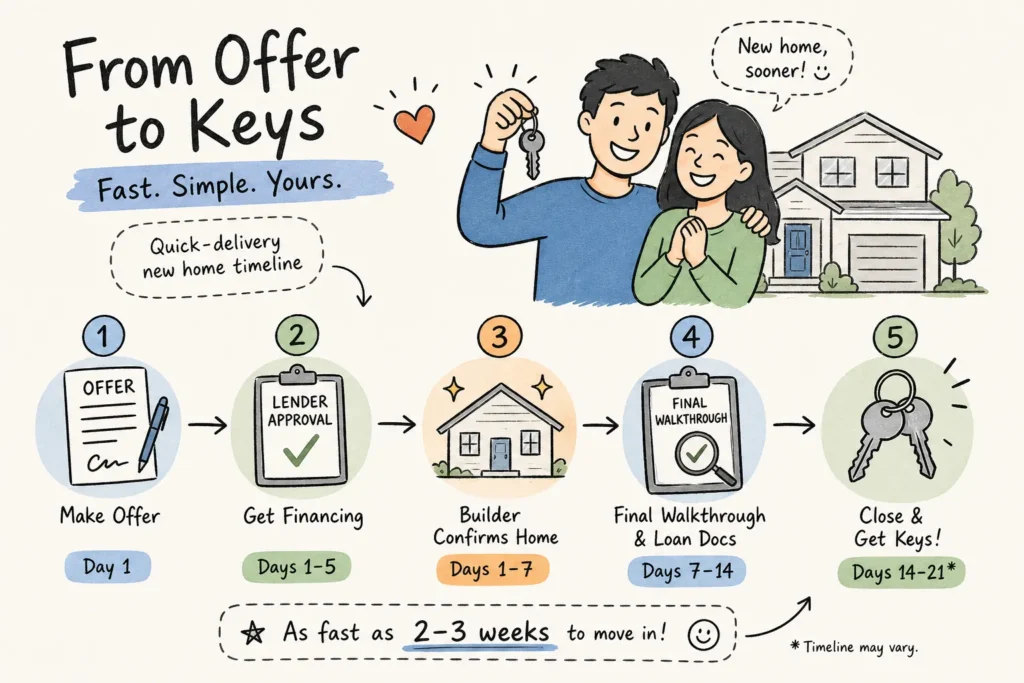
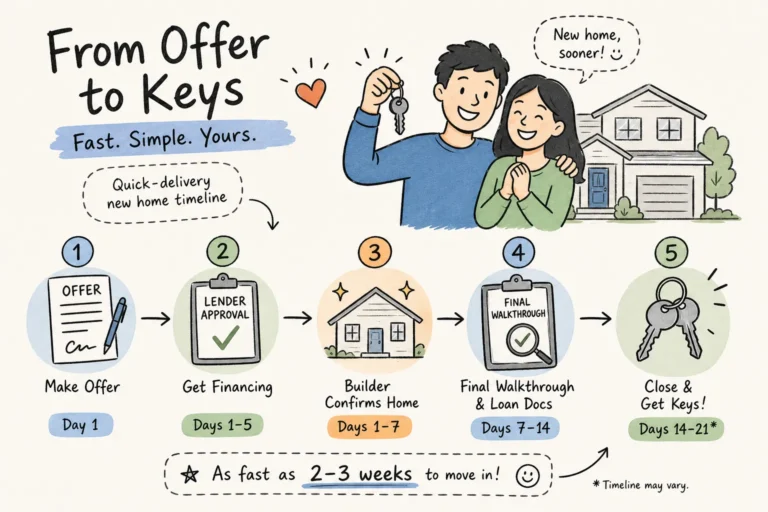
You’ve walked through the home, loved what you saw, and now you’re wondering: how fast can you actually be living there? It’s the right question to ask. If you’re wondering how long it takes to close on a quick delivery new construction home, the honest answer is that most buyers complete the process in 30 to 60 days. Where you land in that window depends mostly on your loan type and how prepared you are when the process starts.
At John Henry Homes, our quick-delivery homes in Greater Cincinnati and Northern Kentucky are designed to move buyers through closing efficiently. The construction is done, the details are dialed in, and the process is built to get you to the finish line without unnecessary back-and-forth.
How Long Does Closing Take for a Quick-Delivery New Home?
A quick-delivery home is one that’s already built or within days of being finished. That single fact changes everything about the buying timeline. With a custom build, a buyer typically waits 6 to 12 months or more, depending on scope and permits, while the home is constructed, managing draw schedules, structural inspections, and the inevitable surprises that come with breaking ground. A quick-delivery purchase skips all of that entirely.
Because the home already exists, the closing process closely mirrors a standard resale transaction. The lender is evaluating a finished property with an established value, which is why underwriting moves faster and the overall timeline compresses. The buyer’s role shifts from tracking construction milestones to gathering documents and staying responsive.
What determines where you land in the 30 to 60 day window comes down to four variables: loan type, whether the certificate of occupancy is already in hand, how quickly you supply complete documentation to your lender, and how efficiently your builder coordinates with the title company. A cash buyer on a fully completed home with a clean title can close in as little as 7 to 21 days. A buyer using VA or FHA financing on a home awaiting its final inspection will sit closer to 60. Each of these variables gets its own section below.
The closing phases, week by week, your quick delivery home timeline
Week 1 to 2: signing the purchase agreement and activating your lender
Once you sign the purchase agreement, the clock starts. Earnest money is deposited, you formally apply for your mortgage if you haven’t already locked in pre-approval, and the lender orders the appraisal. This first week is the most important one for the buyer because every document submitted late here creates a cascade of delays later. Treat it as urgent.
The purchase agreement on a quick-delivery home typically establishes a closing window rather than a fixed date, often within 30 to 60 days of the home’s completion, or an “on or about” window that protects both sides. That flexibility exists for good reason, but it also means you have no time to coast. Getting your full document package to the lender on day one of this phase is one of the most effective ways to trim time off your underwriting queue.
Week 2 to 4: appraisal, underwriting, and the clear to close
After the lender orders the appraisal, the property is inspected and valued independently of the contract price. Once that report comes in, the underwriter reviews the full file, confirms the value supports the loan amount, and issues conditional approval. Satisfying those conditions, which usually involve verifying a few final documents, leads to the clear to close.
The clear to close typically arrives 1 to 2 weeks before the closing date, though it can come as late as two days out on tighter timelines. One non-negotiable federal requirement shapes the end of this phase: the Closing Disclosure must be in your hands at least three business days before you sign. That rule sets a firm floor on how quickly the final steps can move, regardless of how smoothly everything else goes. For an accessible overview of common closing timelines and what to expect, see this discussion of how long to close on a house.
Week 4 to 6: title clearance, final walkthrough, and keys
With the clear to close issued, the title company confirms the property is free of open liens or unresolved permit issues, and the final walkthrough is scheduled for 24 to 48 hours before closing. The walkthrough is your opportunity to verify that any punch list items have been resolved and the home is exactly as it should be. For a well-prepared quick-delivery home, this is the smoothest phase of the entire process.
On closing day, you wire your down payment and closing costs to the title company and all parties sign the documents, transferring ownership. Buyers in Greater Cincinnati should budget 2% to 5% of the purchase price for closing costs, which works out to roughly $7,000 to $14,000 on a $350,000 home and can include lender fees, title insurance, prepaid property taxes, and any applicable HOA initiation fees.
How your loan type shapes the time to close on a new build
Conventional loans: the fastest mortgage path
Conventional financing averages 30 to 45 days to close, making it the fastest mortgage option for buyers of completed homes. Fewer regulatory requirements mean the appraisal process moves more quickly and underwriting conditions tend to be less layered. For buyers who qualify, conventional financing is the straightforward path on a move-in ready new construction home.
FHA and VA loans: build in extra time
Both FHA and VA loans run 45 to 60 days on average, and the reason is specific to how those programs handle appraisals. Government-backed loans require the appraiser to verify the home meets detailed habitability conditions, not just confirm market value. If the certificate of occupancy isn’t yet issued or the appraiser flags items for correction, a re-inspection is required before the loan can proceed, adding 7 to 14 days at minimum.
Buyers using FHA or VA financing should communicate the expected timeline clearly with the builder before signing. A good builder will tell you exactly where the home stands in the inspection process so you can set accurate expectations with your lender from day one. First-time buyers may also find practical guidance in our New construction home tips every first-time buyer needs | John Henry Homes.
Cash buyers: a completely different game
Without a lender in the process, a cash buyer on a completed home with clean title can close in 7 to 21 days. No appraisal is required, though a private inspection is strongly advisable. There’s also no underwriting queue to wait in, and the three-business-day Closing Disclosure requirement doesn’t apply. If speed is the priority and the liquidity is there, cash closes faster than any mortgage option by a wide margin.
The steps most likely to delay your closing
Appraisal and certificate of occupancy holdups
The appraisal is the single most common delay source in new construction closings. If the home isn’t fully complete when the appraiser visits, they may issue the report “subject to completion,” which requires a re-inspection once work is finished. That re-inspection adds 7 to 14 days at minimum, and scheduling the follow-up visit can stretch even longer during peak building season when appraisers are booked out. For a deeper look at the appraisal process for new builds, see this overview.
The certificate of occupancy is the second most common delay, and it’s entirely outside the buyer’s control. Most lenders won’t fund a loan without it. The CO is issued by the local municipality after all required inspections are passed, and in jurisdictions with permit office backlogs, that process alone can push closing by 2 to 4 weeks. Ohio requires a CO for all new residential construction under the Ohio Building Code, so this is a real consideration in the Greater Cincinnati market. Asking your builder for the current certificate of occupancy status before signing gives you a clearer picture of your actual timeline.
Underwriting resets and title surprises
Underwriting delays typically trace back to one of two causes: a disputed appraisal value or a change in the buyer’s financial picture after the file enters review. Taking on new debt during the process, a car loan, a new credit card, or a large purchase that shows up on a bank statement, can reset the review clock by 30 to 45 days. Changing jobs after applying for a mortgage carries the same risk. These are entirely avoidable delays.
On the title side, open permits or unresolved liens are the most common issues, and if they surface in the final week of the process, expect 10 to 14 additional days to resolve them. HOA estoppel letters are a quieter source of delay: if the property is in a managed community, the management company can take 5 to 10 business days to respond, and if nobody ordered that letter early, it can hold up closing right at the finish line.
A practical checklist to close faster
Documents to gather before you sign anything
The buyers who close fastest arrive at the lender with a complete package from day one rather than feeding documents in piece by piece. Having everything organized before you sign the purchase agreement can trim a week or more off the underwriting process. Here’s what to have ready:
- Two years of W-2s or 1099s and two years of federal tax returns
- Two months of recent pay stubs
- Two to three months of bank statements for every account you hold
- Government-issued photo ID
- A gift letter if any portion of the down payment comes from a family member
- For self-employed buyers: two years of business tax returns and a year-to-date profit and loss statement
What not to do once your loan is in underwriting
Protecting your file from self-inflicted delays is just as important as submitting strong documents upfront. After your loan enters underwriting, avoid opening new credit accounts, making large undocumented deposits, switching employers, or co-signing any loan for someone else. Each of those actions can trigger a re-underwrite that adds weeks to the process and, in some cases, jeopardizes the approval entirely.
On the coordination side, contact the title company early and ask two specific questions: are there any open permits on the property, and has the HOA estoppel letter been ordered (if applicable)? Both items have fixed lead times that nobody can compress once they’re in motion. Getting them started early is the simplest way to prevent a last-minute delay from an otherwise smooth closing.
Why your builder’s coordination matters as much as your lender’s
A builder’s internal process has a direct impact on how fast you close. Builders who secure the CO before marketing the home, maintain a clear punch list that’s resolved before the final walkthrough, and provide the title company with accurate deed and permit documentation upfront eliminate an entire layer of closing risk. Your lender can only move as fast as the builder gives them accurate information to work with.
A well-run quick-delivery program looks like this in practice: completed inventory homes come with COs in hand or within days of issuance, builder documents pre-organized for the title company, and a punch list process designed to close out items well before the closing date. That structure means no last-minute scrambles to locate permit history or schedule surprise re-inspections. John Henry Homes builds its quick-delivery program around exactly these principles. For more on why move-in ready inventory matters, see 9 Benefits of Buying a Move-In Ready New Construction Home | John Henry Homes. For buyers using conventional financing, that kind of coordination supports a 30 to 45 day close. For FHA or VA buyers, organized documentation reduces the back-and-forth that typically stretches government-backed timelines.
The communities at Caravel, Hunters Ridge, Turning Leaf, and others across Greater Cincinnati reflect this approach, though inventory changes, so it’s worth confirming current availability directly with the builder. When homes are finished and the process is organized, the move-in experience feels planned rather than improvised. That’s what buying a home should feel like.
Plan your move-in with confidence
Understanding how long it takes to close on a quick delivery new construction home comes down to knowing your variables. The spec home closing time for most buyers runs 30 to 60 days after contract, that figure refers to the closing phase itself, not time spent searching for the right home. The buyer who understands each phase, knows which steps carry delay risk, and shows up with complete documentation will consistently land at the shorter end of that window. Two factors drive the timeline more than anything else: loan type and builder coordination. Get both right, and your move-in date becomes predictable rather than a moving target. For broader context about typical closing timelines from industry sources, see this guide on how long does it take to close on a house.
If you’re exploring new construction homes in the Cincinnati area, John Henry Homes has completed inventory available now across several communities, with homes starting in the mid-$300Ks. You can schedule a self-guided tour through NterNow on your own schedule, or reach out directly to explore what’s available and what fits your timeline. The homes are ready when you are. For practical buying strategies, check our 10 Home Buying Tips for Move-In Ready Homes | John Henry Homes.

9 Advantages of Choosing a Local Cincinnati Home Builder
Kevin Clark
• 10 min read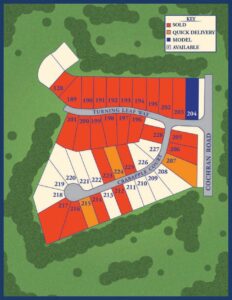
Turning Leaf: New Homes in Hamilton Township’s Little Miami School District
Josh Blatt
• 14 min read
Is a Smart Home Worth It? What Comes Standard in a New John Henry Home
Josh Blatt
• 7 min read
New Construction Homes in Colerain Township: A Guide to Hunters Ridge
Josh Blatt
• 4 min readRelated Articles

How to Get a Cincinnati Home Construction Loan: A Banker’s Inside Guide
First-Time Home Buyer Ohio Requirements: Your Simple Guide for 2025
How to Schedule a New Construction Home Inspection: Expert Guide for Buyers
Want to know how to buy and sell a home effectively
Get exclusive access to the best homes on the market by signing up today.