
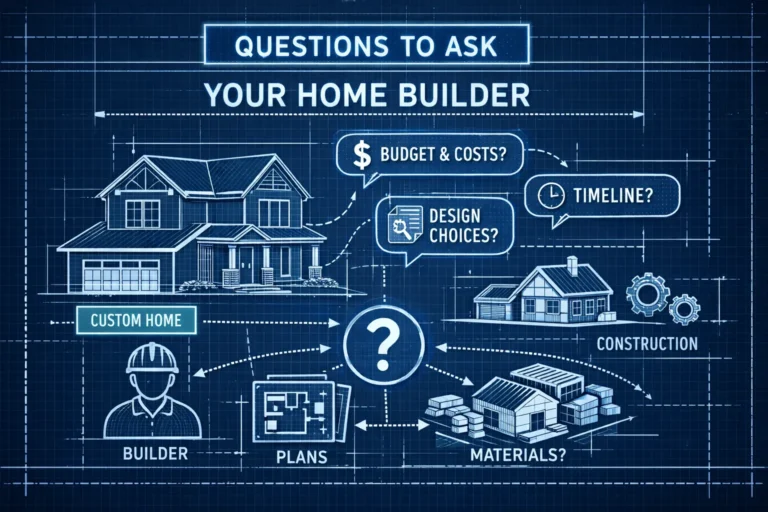

Top Questions to Ask Your Custom Home Builder

Josh Blatt
• 11 min read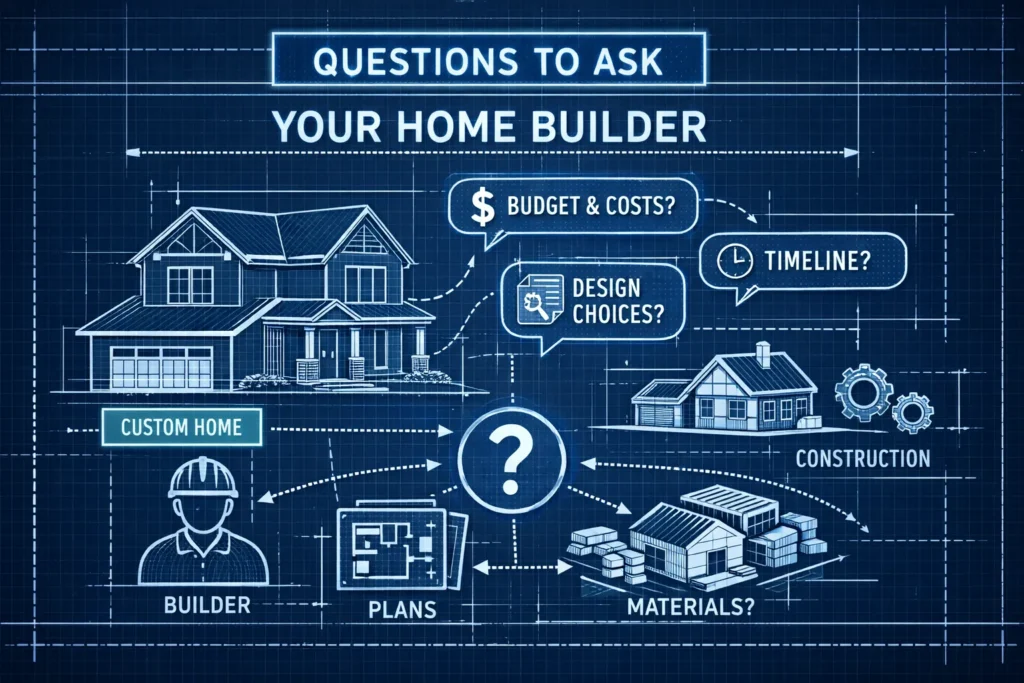
Planning a custom home raises two practical questions: how long will it take and how much will it cost. Expect about 10–18 months from contract to move-in and roughly $180–$350 per square foot for a mid-tier custom home. Use this guide to compare how different builders handle design, permitting, construction and warranty so you can pick a team that matches your priorities: speed, cost control or full architectural freedom.
What you need to know
Start with a few practical facts so your first conversations produce useful answers. The bullets below give quick benchmarks and behavior to watch for when you compare bids.
- Be prepared. Bring lot and site details, a budget range and your top three must-haves so a builder can give meaningful feedback during a 30-minute discovery call. Clear priorities shorten the estimate process and reduce costly assumptions.
- Watch for red flags. Missing references, no insurance or license, vague change-order policies and large undisclosed upfront payments are warning signs. Insist on a clear contract and warranty before you move forward.
What to expect from a custom home builder
When you hire a custom home builder, expect a defined scope that runs from schematic design through the final walkthrough and warranty. A reliable team will handle design development, permitting, site coordination and construction management while using subcontractors for many trades. Insist on a single point of contact and a documented milestone schedule so you always know schedule and budget status. For a complete walkthrough of the process, see our Step By Step Custom Home Building Guide.
Builders use different delivery models that change timing, cost control and design freedom. Design-build firms combine architecture and construction for faster decisions and tighter cost control, bespoke builders prioritize full architectural freedom and high-end finishes with longer lead times, and build-on-your-lot specialists focus on site logistics and local-code challenges for specific lots. Confirm which approach a bidder uses and whether it fits your timeline and budget. For details comparing custom, semi-custom and spec approaches in Cincinnati, read Custom vs. Semi-Custom vs. Spec Homes in Cincinnati.
Typical phase durations are:
- Pre-construction and design: 2–6 months
- Site prep and foundation: 1–2 months
- Framing and exterior: 1–3 months
- Rough-ins (mechanical, electrical, plumbing): 1–2 months
- Finishes and trim: 3–6 months
- Final inspections and walkthrough: 2–4 weeks
For a practical reference timeline of build phases, see this house-building timeline guide.
For perspective, a 2,800 square foot mid-tier home at $220 per square foot would total about $616,000 before land and major site work and typically follows the timeline above. Use those benchmarks when comparing bids, ask which items are included versus subcontracted, and insist on a milestone schedule and warranty terms before signing. The next section lists the questions to ask during your first contractor interview so you can compare responses fairly.
Pre-interview checklist: documents, budget and site details to gather
Arrive at the first call prepared so a builder can give a meaningful, comparable response. Preparation saves time and prevents vague ballpark estimates that hide differences in contingencies and assumptions.
Bring key site documents when you can, such as a lot survey or plat, HOA rules and architectural guidelines, soil or boring reports and topography, utility maps or flags for water, sewer, gas and electric, and any floodplain or conservation overlays or prior permits. If you lack site data, most builders will add broad contingencies, so ask whether the builder will perform or coordinate a site evaluation to make bids comparable. Check local permitting requirements and processing expectations for your county — for example, see this Hamilton County building permit resource if your project is in the Cincinnati area.
Be ready with a realistic budget range and ranked priorities before you request numbers. Also, write a short must-have list and a stretch list so tradeoffs are clear and change orders stay minimal, and be explicit about timing, school-district requirements and any neighborhood constraints that are non-negotiable.
Must-ask questions to vet experience, design flexibility and quality
Show up to interviews with a short, organized question set so you can compare answers directly. Group questions into credentials, process, craftsmanship and communication to keep the conversation focused and collect copies of any documents they reference.
Credentials: Verify current licenses and a certificate of insurance and call at least two recent clients. Ask direct questions like “Are you licensed for this county?”, “Can I see your insurance certificate?” and “May I tour a completed home or current jobsite?” Make reference checks part of your shortlist process when searching for local “custom home builders.” Learn more about why local expertise matters in Why Local Home Builders in Cincinnati Know Your Dream Home Better.
Design process and change orders: Ask whether design work is handled in-house or by an outside architect, how many plan revisions are included and how change orders are priced and approved. Request a sample change order and a typical approval timeline so you understand whether changes will be collaborative or costly and slow. Those answers reveal whether a builder prioritizes adaptable design or fixed-scope estimates.
Materials, trades and quality control: Ask which brands and suppliers are typical, which trades are employed directly versus subcontracted and how they track punch lists and warranty repairs. Request typical cost-per-square-foot ranges for projects like yours and examples of past warranty work so you can judge finish level and responsiveness. Use the answers to build a comparison sheet for your next interview.
How to compare bids and decode estimates
Clarity beats the lowest number when bids arrive. Require every bidder to price the exact same scope so you can compare like-for-like, and insist on identical square footage, the same finish allowances and a defined scope for site work before you focus on totals. Comparing consistent scopes uncovers true differences in materials, labor and exclusions.
Normalize allowances by specifying ceilings for kitchens, bathrooms, flooring and appliances, and ask for vendor lists or sample specs so you know what each allowance buys. Send a side-by-side scope checklist to every bidder that covers square footage, roof type, foundation, mechanical systems and landscaping so gaps are obvious. When allowances are open-ended, require a clear ceiling or a priced upgrade list to avoid surprise costs during selections.
Watch for common exclusions that can shrink an attractive initial price, such as septic or sewer connections, driveway and curb cuts, landscaping, utility tap fees, special foundation work, geotech or rock removal and permit costs. Ask builders to include these explicitly or to price them as separate line items, and add a contingency of 5 to 10 percent for unknown site risks, raising that amount for steep or heavily wooded lots.
Use cost per square foot as a benchmark but compute it correctly by excluding land and separating soft costs such as architecture, financing and permit fees. For example, a 3,000 square foot mid-tier build at $250 per square foot equals $750,000 while a luxury build at $400 per square foot equals $1,200,000, both excluding lot cost. For more on how builders and owners commonly calculate price per square foot, see this cost-per-square-foot guide. Request three recent comparable projects from each builder and local comps to validate regional variation before you decide. For practical estimating practices and templates, consult a construction estimating resource such as construction estimating guidance.
Red flags, contract essentials and warranty must-haves
Watch for concrete red flags that signal trouble: refusal to provide references, no proof of insurance or license, vague change-order policies, large undisclosed upfront payments, frequent phone-number changes and evasive answers about past litigation. Each of these points can indicate hidden risk, such as uninsurable trades, surprise costs or difficulty enforcing your rights. If you encounter any red flags, ask for a certificate of insurance, a copy of the license, written reference contact information and examples of past projects, and check public records for judgments or liens.
Insist on specific contract elements before you sign, including a detailed scope of work, a clear schedule with milestones, a payment schedule tied to those milestones, explicit change-order procedures and contingency allowances. A milestone-based payment schedule protects both parties by linking cash flow to completed work and verified inspections. For complex jobs, have a real estate or construction attorney review builder obligations and dispute resolution language so responsibilities are clear.
Understand warranty structures and who handles claims: expect one to two years on workmanship, longer structural warranties where applicable, and manufacturer warranties passed through for appliances and systems. Confirm the warranty request process, typical response times, whether requests are logged in writing and who performs repairs after closing. Ask about transferability if you may sell during the warranty period and request written service-level expectations for post-closing support.
Contracts are your primary tool to prevent disputes, so document every change and keep copies of communications, invoices and lien waivers. Take these items to your next meeting with a builder and use them as a checklist when you compare final bids and select the team that matches your protections.
Case study: John Henry Homes’ Cincinnati award-winning build and next steps
This infill project used a compact footprint and a split-level plan to handle a steep, sloped lot while giving the homeowners daylight and low operating costs. The team chose clerestory windows, high-performance insulation and a simplified material palette, and early finish-package decisions compressed long lead times. The build finished four weeks ahead of a 36-week schedule and came in about 2 percent under budget, earning a local builders association award for design excellence.
Suggested visuals include exterior site-context shots, the open-plan main level and the mechanical closet showing energy systems. Client feedback was simple and direct: “We got the light and flow we asked for, and the budget stayed honest.” Measured outcomes included a budget variance of -2 percent, a four-week early finish and an estimated 18 percent reduction in utility loads thanks to higher-grade windows, upgraded HVAC and integrated smart controls.
The project shows how early finish decisions and disciplined weekly meetings prevent surprises, and how better windows and HVAC deliver long-term value. Smart-home thermostats and integrated lighting schedules lowered on-site labor and sped commissioning, which explains why process, materials and communication matter when you compare builders. To pursue a similar project, prepare a normalized scope, send it to three bidders, schedule a site visit and request references and sample contracts.
Next steps with your custom home builder
Focus your first conversations on three things: your site, your budget and your project priorities. Share the same information with each bidder so responses are comparable, and ask direct questions about experience, design flexibility and build quality. Those steps turn vague estimates into meaningful answers that help you choose the right partner.
Choosing a builder is also about matching services to your lifestyle. John Henry Homes provides personalized custom design, quick-delivery options, self-guided model tours, smart-home integration and energy-efficient construction across Greater Cincinnati and Northern Kentucky. When a builder shows clear scopes, realistic timelines and local references, you get a smoother process and a home that fits your family.
Your next step is simple: gather your pre-interview packet now—lot or site details, a budget range and your top three must-haves—and schedule a 30-minute discovery call or a self-guided model visit with John Henry Homes. Bring your scope, site notes and preferred finishes to the meeting so you get answers you can compare and the confidence to move forward with the right custom home builder.

9 Benefits of Buying a Move-In Ready New Construction Home
Kevin Clark
• 11 min read
NterNow home tours: explore any new home on your schedule
Kevin Clark
• 11 min read
Local vs. national homebuilders: what Cincinnati buyers miss
Kevin Clark
• 11 min read
New construction home tips every first-time buyer needs
Kevin Clark
• 15 min readRelated Articles
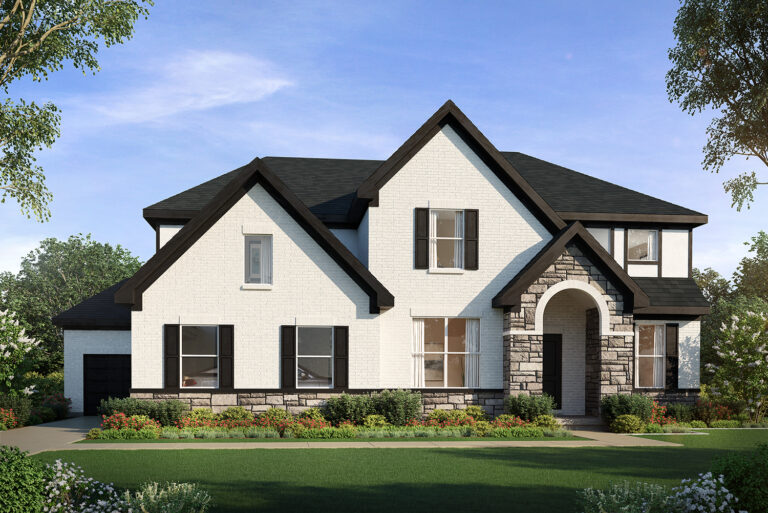
9 Benefits of Buying a Move-In Ready New Construction Home

NterNow home tours: explore any new home on your schedule

Local vs. national homebuilders: what Cincinnati buyers miss
Want to know how to buy and sell a home effectively
Get exclusive access to the best homes on the market by signing up today.